Akplants
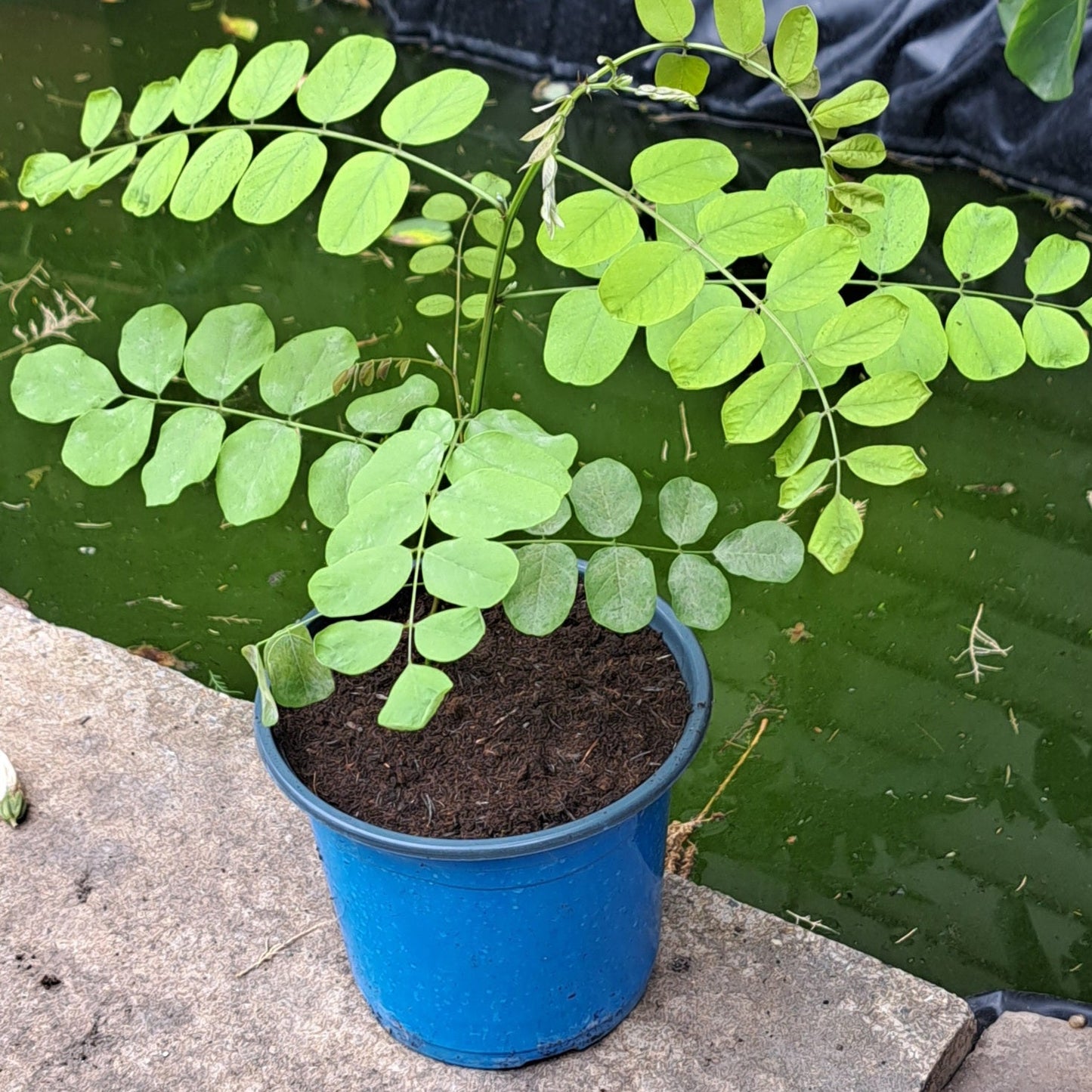
Falce Acacia sapling (Robinia pseudoacacia)
Falce Acacia sapling (Robinia pseudoacacia)
Couldn't load pickup availability
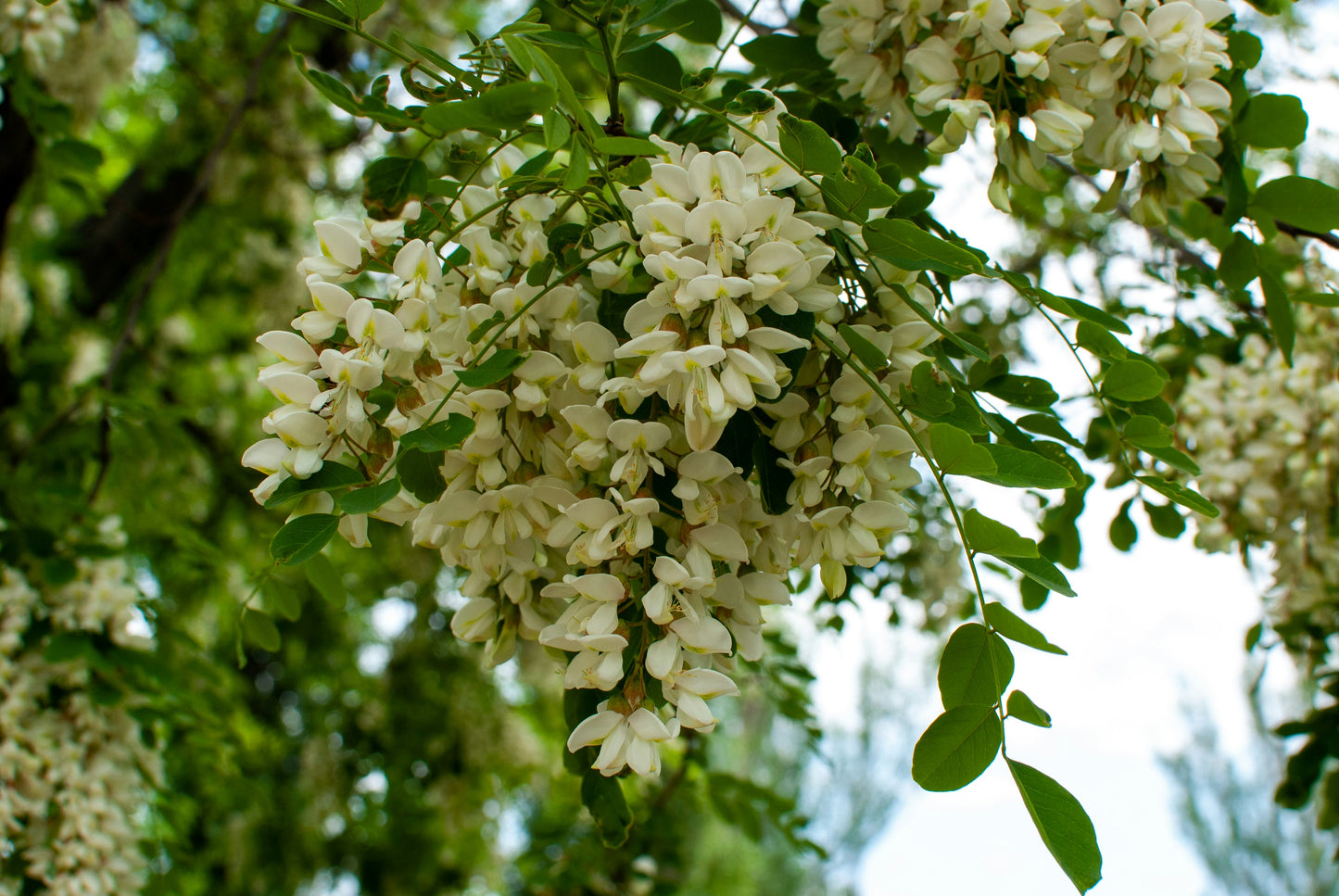
The Robinia pseudoacacia, commonly known as the False Acacia or Locust Tree, is a fast-growing, statuesque tree that earns its place in any garden with cascading clusters of intensely fragrant white flowers in early summer. A magnet for bees, it is the source of the celebrated Acacia honey — prized across Europe for its delicate, floral sweetness.
The plant you will receive is approximately 6 to 8 inches tall in a 5-inch pot, ready to establish and grow on in your garden or landscape.
Native to the eastern United States and introduced to Britain around 1636, Robinia is a true garden workhorse. As a legume, its roots fix atmospheric nitrogen directly into the soil, naturally enriching the ground around it — a rare and valuable trait. Its vigorous suckering habit also makes it an excellent choice for stabilising slopes and banks, while its dense, durable timber has long been valued for outdoor use. The deeply furrowed bark and elegant pinnate leaves — reminiscent of a true acacia — give this tree year-round structural interest.
We have a good stock of young saplings available now.
Instructions for False Acacia Trees:
Planting:
Plant in spring or autumn in a permanent position — Robinia does not transplant well once established, so choose your spot carefully.
Soil:
Tolerates a wide range of soils including poor, dry, and sandy conditions. Prefers well-drained soil; avoid waterlogged ground.
Sunlight:
Full sun is ideal. Requires at least 6 hours of direct sunlight daily for best flowering and growth.
Watering:
Water regularly when young to help establish a strong root system. Once established, Robinia is highly drought-tolerant.
Mulching:
Apply a layer of mulch around the base to retain moisture, regulate soil temperature, and suppress weeds.
Care and Maintenance:
Pruning:
Prune in late summer or early autumn to remove dead or crossing branches. Avoid pruning in spring when sap is rising, as wounds bleed heavily.
Suckering:
Robinia produces suckers freely — remove promptly if you wish to restrict spread, or allow to naturalise on slopes for erosion control.
Disease and Pests:
Generally robust and trouble-free. Occasionally susceptible to leaf miners and aphids, but rarely requires treatment.
Fertilizing:
Rarely needed — the tree's nitrogen-fixing roots naturally enrich the surrounding soil. Avoid high-nitrogen fertilisers.
Frequently Asked Questions
When does the False Acacia bloom?
False Acacia produces its fragrant white flower clusters in early summer, typically June in the UK. The blooms are a vital nectar source for bees and are the origin of the famous Acacia honey.
How tall does a False Acacia grow?
Robinia pseudoacacia typically reaches 15–25 metres at maturity, with a broad, open crown. Growth is fast — often 60–90cm per year once established — making it one of the quicker-growing large trees for UK gardens.
What are the best growing conditions?
False Acacia thrives in full sun and well-drained soil. It is exceptionally tolerant of poor, dry, and sandy soils, making it ideal for challenging sites where other trees struggle. Avoid heavy, waterlogged ground.
Is the False Acacia suitable for UK gardens?
Yes — Robinia is fully hardy across the UK and withstands temperatures well below freezing. It is widely planted in parks, gardens, and along roadsides for its ornamental value, wildlife benefits, and soil-improving properties.
Does it attract wildlife?
Absolutely. The fragrant early-summer flowers are a magnet for bees and other pollinators. The tree also provides habitat for birds and insects throughout the year.
What maintenance does it require?
False Acacia is low-maintenance once established. Prune lightly in late summer if needed, manage suckers as desired, and mulch around the base annually. No fertiliser is required thanks to its nitrogen-fixing roots.
Can I grow it in a container?
Young saplings can be grown in large containers temporarily, but False Acacia performs best planted in the ground where its root system can develop fully. If container-growing, use a substantial pot with excellent drainage.
When is the best time to plant?
Plant during the dormant season (November–March) for best results, avoiding periods of hard frost. Spring planting is also suitable. Choose a permanent position from the outset, as Robinia does not transplant well once established.
Share